
360 DEGREE IMAGES
360-degree images let visitors look around a space from one viewpoint.
Use them for virtual tours, property presentations, product views or social-media posts when a flat photo does not show enough context.
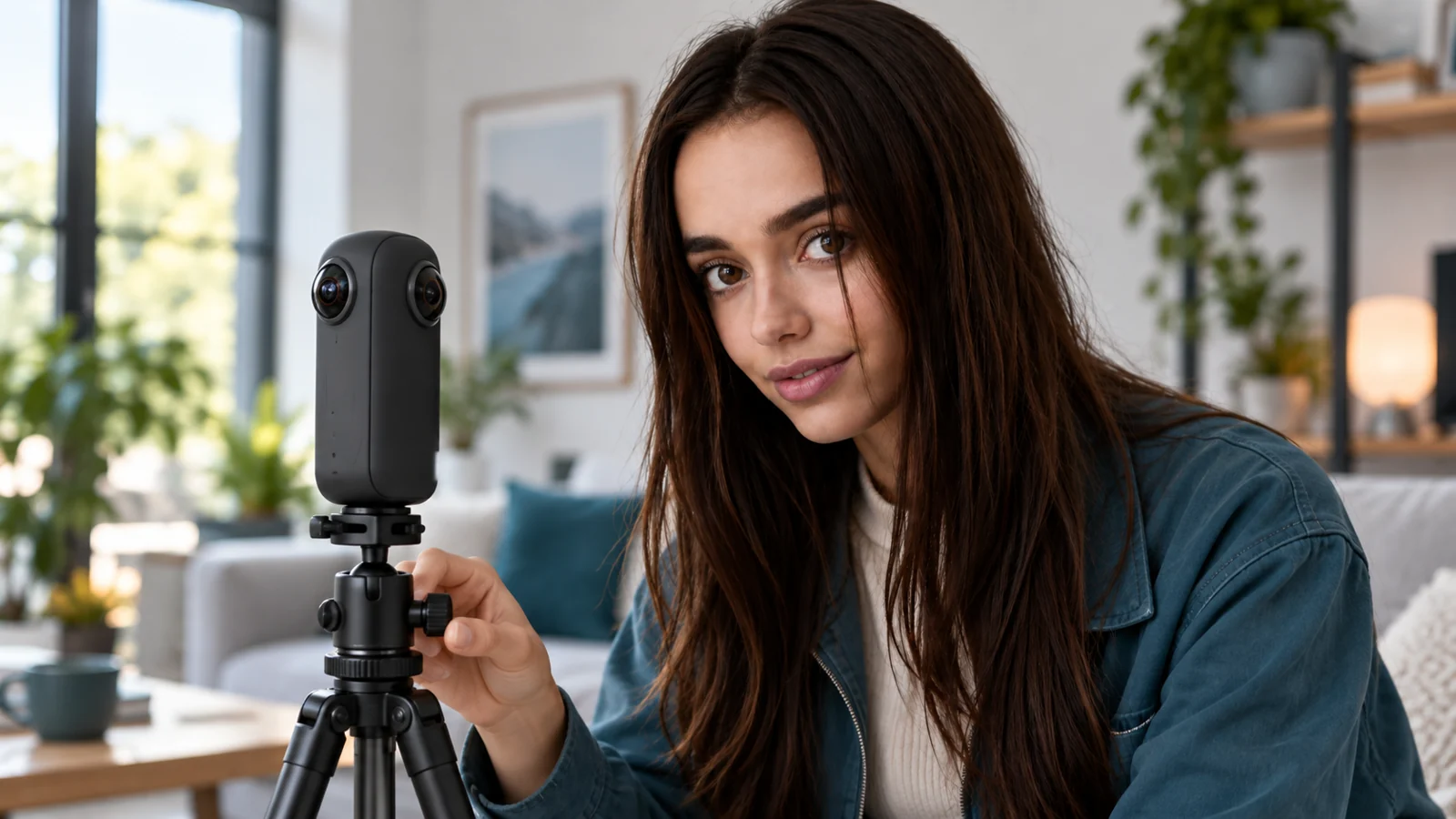
In the past, producing a 360-degree photo required specialised equipment and careful stitching. Current cameras and publishing tools make production and sharing more accessible.
Higher-resolution cameras can record detailed stills and video. Choose the format that fits the intended device, platform and viewing distance.
Common uses include the following:
- Link several 360-degree images into a virtual tour.
- Give real-estate viewers a room-by-room overview.
- Present products or venues for marketing.
- Share an interactive viewpoint on social media.
A spherical image shows more of a scene than a cropped flat photo. Linked viewpoints can help visitors understand how rooms connect and decide what they want to see in person.
A virtual tour links 360-degree views of a real or digital place and can be opened on a computer or smartphone.
Tours can cover a room, office, property or larger location. The goal is to give visitors enough context to plan a visit, contact you or compare options.
A 360-degree image cannot replace being there, but it can help someone understand a space before visiting. Visitors can also share the view with people who are not on site.
Frequently asked questions about 360-degree images
Here are practical questions about production, publishing and use cases for 360-degree images.
Navajo Nation Petroglyphs
Petroglyphs near Tuba City, Navajo Nation.
Hoover Dam
Hoover Dam near Las Vegas. Sample photo.
What is a 360 degree image?
Why use 360-degree images?
360-degree images provide an all-around view and can show spaces, products or locations clearly. Whether they fit your project depends on the capture, platform and audience.
What are 360 degree images used for?
What is often difficult about 360-degree images?
With an all-around view, distracting details cannot simply be hidden, so the location should be prepared. Post-processing can take longer than for single images, and achievable resolution depends on the equipment.
What benefits can 360-degree images provide?
360-degree images can support orientation, presentation and later links to tours or interactive elements. The practical benefit depends on image quality, integration and use case.
What are the disadvantages of 360 degree images?
The disadvantages of 360 degree images are that post-processing takes longer, not every software tool can handle 360 degree images, and they may not have as high a resolution as other images because they are not just a small section but always a whole scene.
How much do 360 degree images cost?
The price depends on the complexity of the order. Unprocessed 360 degree images are the cheapest to have, but often have weaknesses in the area of light sources and shadows. Therefore, we generally advise to use post-processed HDR 360 degree images.
Should the images be linked as part of a virtual tour, the complexity increases with the number of images and links and, if applicable, interactive elements.
Today, morethan ever, people want to see for themselves the house they are buying. This allows them to get an idea of the space and how it feels to live there and how well it fits their own lifestyle. For this reason, 360-degree photography is becoming increasingly popular with real estate agents. They help buyers visualize how they would live in the home themselves, and ensure they know exactly what they’re getting when they buy.
With 360-degree imagery, you as a realtor can help your clients visualize their home and show them the best angles to capture the true beauty of the home. The combination of multiple 360-degree shots helps them see the house from different perspectives, which gives them
in turn, helps you make better decisions when it comes to buying a home. You can also use 360-degree images to create a virtual tour of a home or property. This way you can show potential buyers and sellers what the house looks like from the inside. So you can use this technique to show potential buyers the layout of the room, the floor plan, the view out the windows, the appliances and other features they may not have seen before. This is very useful to show the property in a new way. By using 360-degree images, you can show the property in a different light. The property will look more attractive than if you just use standard photos. The potential buyers get a better impression of the property and its surroundings.
We all know that people like to look at beautiful pictures. But when it comes to marketing and advertising, you’ll be surprised how few companies really understand this concept. People don’t just want to look at a picture – they want to look at a picture and feel a sense of emotion or passion. 360-degree photography is great for conveying emotions and is therefore one of the hottest trends in advertising today. It’s a great way to grab a user’s attention and captivate them with a single image. You’ve probably seen 360-degree images in your social media feed or in online advertising
seen These are a great way to showcase a product or service in a unique way. 360 degree images are also a very useful tool to make your website more attractive and appealing. They can also be used for external presentation for a variety of purposes, such as showcasing your company, giving your customers an unusual perspective, letting your website visitors know what your company does, or increasing your social media presence and engagement. They help you build your brand, increase sales and attract more customers.
ASK A QUESTION
Do you have questions about our 360-degree images? Contact us to discuss the location, format and intended use.

Based in the east of Munich, we share content with like-minded people and look forward to hearing from you!
Help
Lena and Jana are fictional AI presenters. The illustrations are AI-generated.